Generative Design, It's better than I thought.
A better way to design in a resource constrained future.
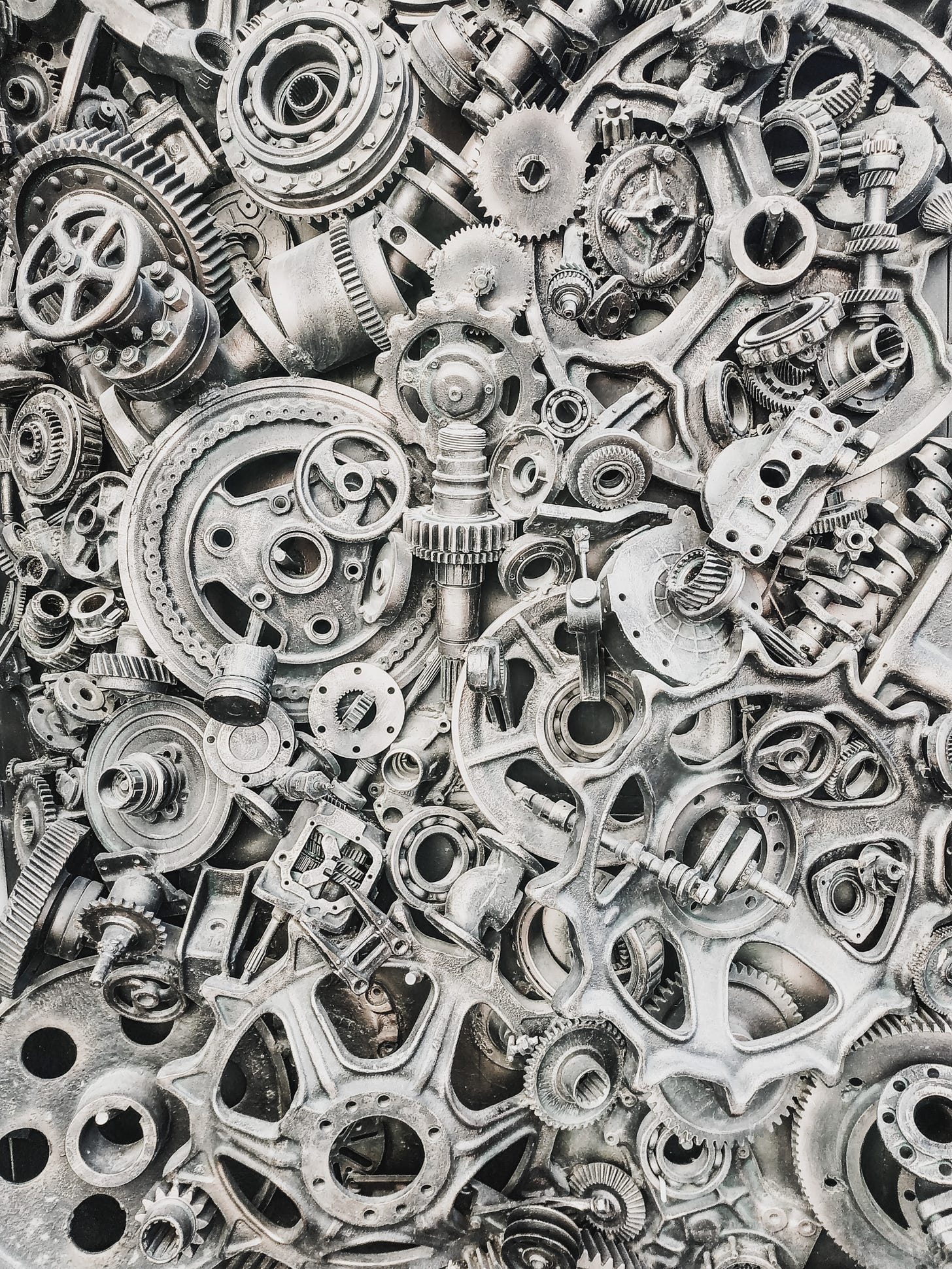
Some months ago I set out to explore design beyond graphic/electronic and digital media. The journey has led me to mess with software products and understand how the physical manufacturing world works. I set out to understand more about CAD and 3D Modelling. I’m now on a new journey to understand all the different additive manufacturing processes there are.
One Sunday morning, late at the workshop. I arrived for my welding 101 lesson. In the background were some to 13 different manufacturing machines most of which with something to do with a computer-generated model. A plasma cutter, a lathe machine some CNC milling machines, you get the idea. It became apparent I now had to venture beyond 3D Printing into figuring out other ways to manufacture and fabricate parts.
I have now since managed to get a couple of models designed and printed. Gotten myself familiar with how 3d modeling software works and the terms applicable. With the knowledge I have acquired I also recently realized most of the things I aspire to design require a bit more knowledge about structures and forces and all that applies in the real world (Physics). The opportunity to design with materials other than plastic is something I can’t let go of. It’s time to explore.
Cue Generative design. A technology-driven approach using AI to generate 3D models that are highly optimized, lighter, and stronger. This sounds pretty cheesy till you dive into the detail. Computer-generated designs have always needed input from humans, they still do. But not so much in the future. With generative design, you can give a computer a set of constraints and allow it to generate different versions of a model that meets the set constraints. Given a set of basic parameters and regions to avoid and a predesigned prepared model, the computer can stress test against each constraint and generate a 3d model if not models. This brings more opportunities from a design perspective but also allows for better design decisions, fewer iterations and if those aren’t convincing computers are still better with most things.
You need a bracket to hold a shelf? In the past, this would look like a triangle brace, in the future, this could look like a web of material.
I have started with the free Coursera course (Generative Design For Additive Manufacturing)from Autodesk and I’ll be sharing more of my experiences as I go.
First published on Substack.