SwingTribe
Social golf platform on a Neo4j temporal knowledge graph, WhatsApp-native, event-driven microservices across React, TypeScript, Supabase and Raspberry Pi.
Golfers do not organise in apps. They organise in a WhatsApp group, in a thread of two hundred messages where somebody posts a tee time, eleven people reply with a thumbs up, four of them mean it, and one pays. SwingTribe started from that observation and refused to argue with it. Rather than asking a tribe to move somewhere new, it reads the group they are already in.
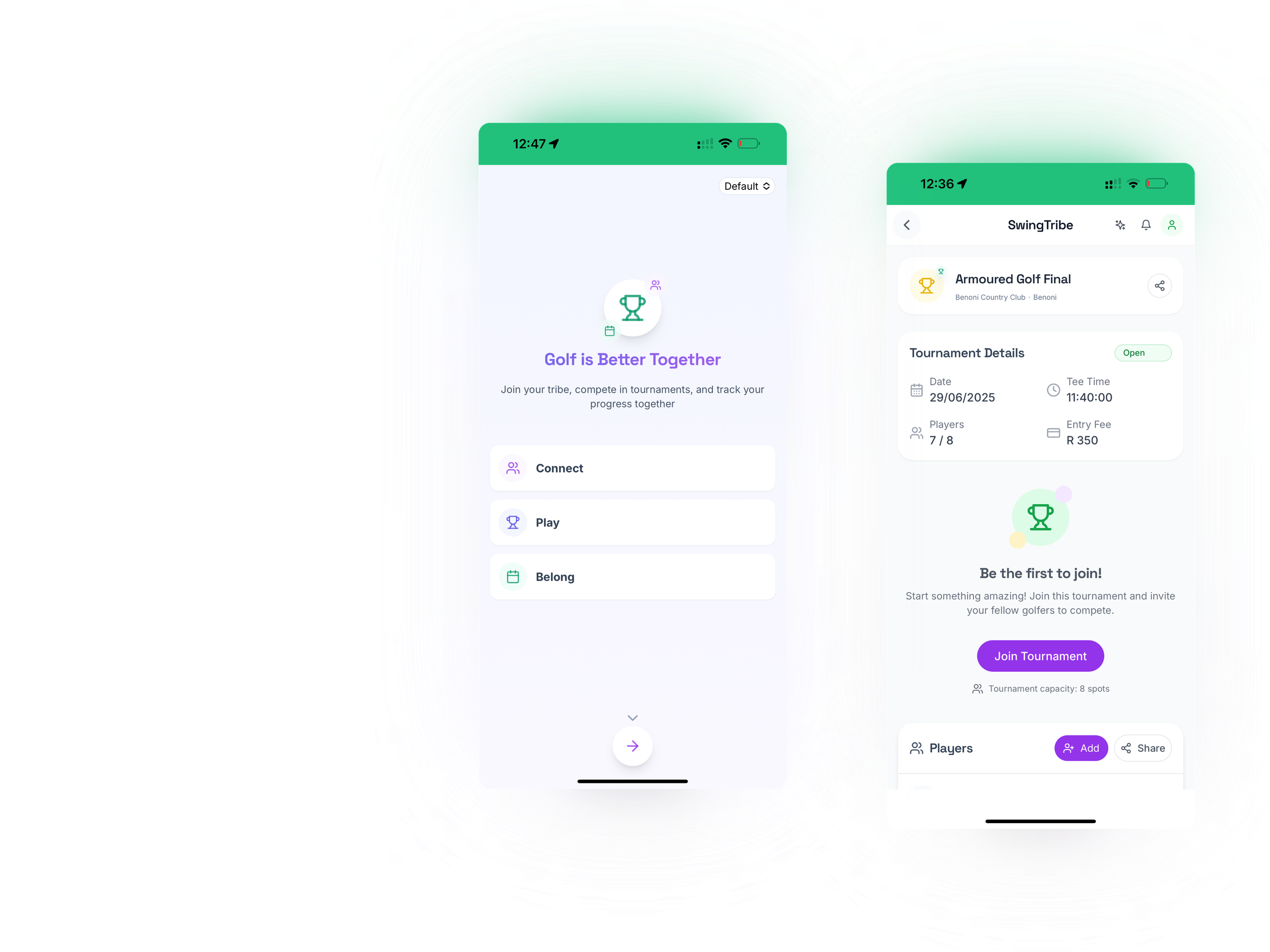
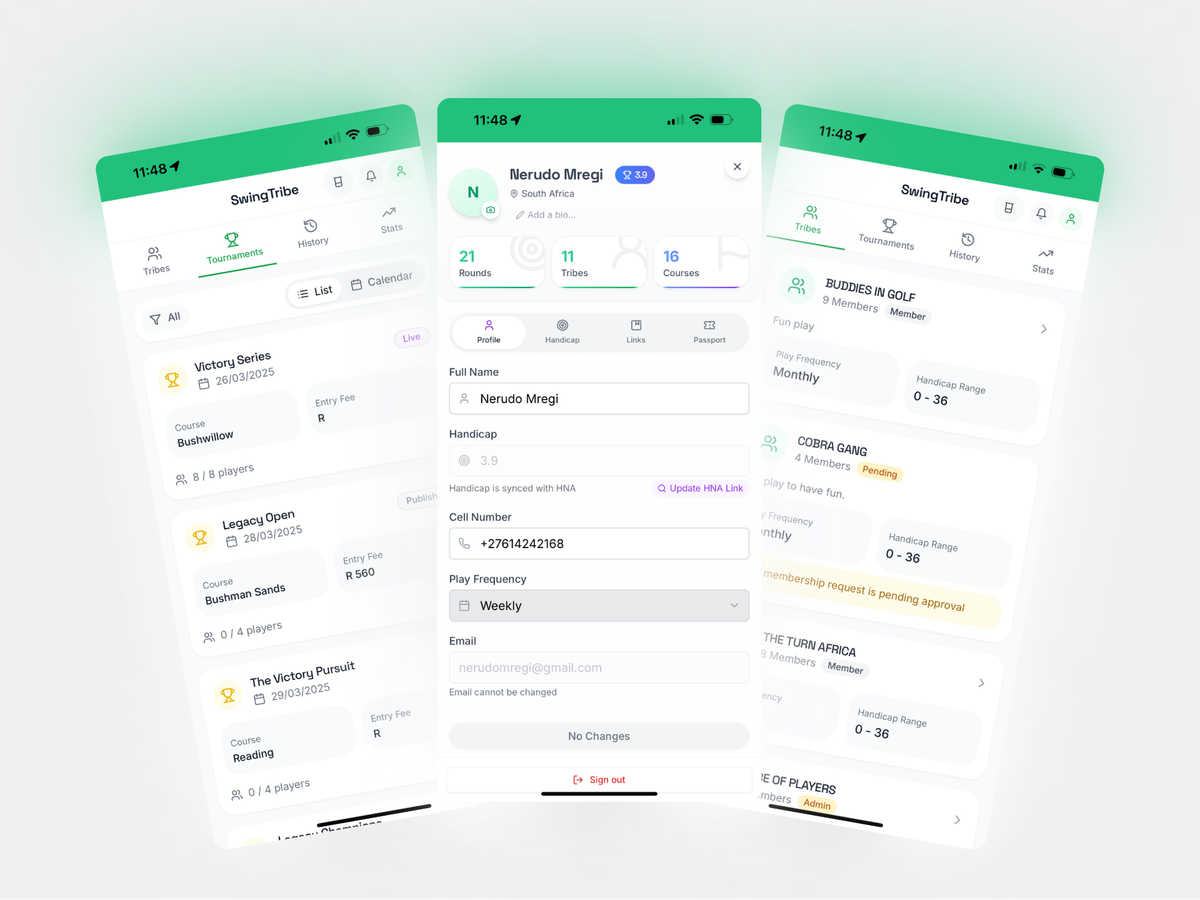
The front end is the boring part, deliberately. React and TypeScript on Supabase, which means Postgres with row level security, authentication and edge functions. It handles tournaments, player registration, payments including pay-at-club, scoring, and the admin tooling that lets an organiser override a registration and have everyone notified. That much is a competent booking product. The interesting half sits behind it, and it is a set of event-driven microservices rather than one application.
Atlas is the memory: a temporal knowledge graph on Neo4j, built with Graphiti, doing LLM-backed entity extraction over conversation. It ingests WhatsApp activity from groups and direct chats, parses RSVP lists down to the emoji people actually use to mean yes, and diffs one version of a list against the next, so the system knows who changed their mind and when. It answers questions in natural language through semantic search, serves retrieval context to the agents, and reports on tournament funnels, tribe engagement and payment conversion. It exposes a data erasure endpoint, because POPIA is not optional and compliance bolted on afterwards never holds.
Relational and graph each earn their place, so the system keeps both. An ETL layer synchronises Supabase Postgres into Neo4j, running either as a Node worker or as a Supabase edge function depending on where it is needed. Postgres stays the system of record for anything that belongs in rows. The graph answers what rows are bad at, which in golf is most of the questions worth asking: who plays with whom, how often, and who has quietly stopped turning up.
Whisper is the concierge, and it is where the AI engineering lives. A stateless service that takes an inbound message, classifies intent, extracts structured parameters from the sentence, builds a short plan to achieve what was asked, queries Atlas for what is already known about this person, calls tee time and tournament providers where it needs to, and returns something a human would plausibly have typed. Stateless by design: it runs on a Raspberry Pi when the Pi is awake, can be stopped to reclaim memory, and fails over to AWS through the gateway without a conversation noticing.
TeeWatch is the opportunistic half. An event-driven microservice that scrapes tee sheets across booking platforms using Stagehand for AI-driven browser automation, matches booked slots against tribe members in the graph, and works out that three people who often play together are booked within an hour of each other and would probably like to know.
The messaging gateway is whatsapp-web.js driving headless Chromium on a Raspberry Pi 5, running natively on ARM64 rather than under Docker, because container overhead on that board is a real cost against no benefit. There is an SMS path as well, Gammu behind a Fastify API with SQLite, for members whose relationship with WhatsApp is complicated.
It runs at fifty tribes and supports golf unions. It is also my testbed: new architecture gets tried here first, which is a polite way of saying this is where I break things before breaking them somewhere that matters.